
Burst or Frozen Pipe in a Virginia Cold Snap? First Steps Before Cleanup
October 15, 2026
Types of Heat Pumps
This is paragraph text. Click it or hit the Manage Text button to change the font, color, size, format, and more. To set up site-wide paragraph and title styles, go to Site Theme.
New Title
Tip: If you're trying to narrow things down before a professional gets involved, run one fixture at a time (just the washing machine, then just a sink, then just the toilet) and watch to see which combination triggers the backup. That simple sequence often tells a technician a lot about where along the main line the blockage sits before they even open the cleanout.
Quick Answer: When a pipe freezes or bursts, the first move is to shut off the main water valve, then turn off power to any wet area, open the taps to drain the lines, and keep everyone out from under bulging ceilings. Cleanup comes after the water is stopped, not before. A frozen pipe that has not split yet can sometimes be thawed gently with warm air or hot towels, but never with an open flame. A pipe that has already split needs a licensed plumber, because the break is often hidden in a wall, a ceiling, or a crawl space, and the water keeps moving until someone stops it.
It is 5:40 on a January morning in Henrico County. The overnight low dropped into the teens, the house is cold in the corners, and the kitchen faucet gives you a thin trickle instead of a full stream. Or worse, you walk past the basement stairs and hear running water where no water should be running. Either way, your next ten minutes matter more than the next ten hours. What you do first decides whether this ends as a repair or as a month of drying out drywall.
This guide walks through the order of operations, from the shutoff valve to the faucets to the ceiling over your head, so you are not guessing while water is moving through the house.
Why Pipes Split in a Virginia Cold Snap
Central Virginia does not get the long, deep freezes that northern states plan around, and that is exactly the problem. Many homes in Richmond, Glen Allen, Midlothian, and Mechanicsville were built with supply lines in exterior walls, unheated crawl spaces, garages, and attics, because for most of the winter nothing there ever freezes. Then a two or three day arctic stretch arrives and those same pipes have no insulation and no heat source.
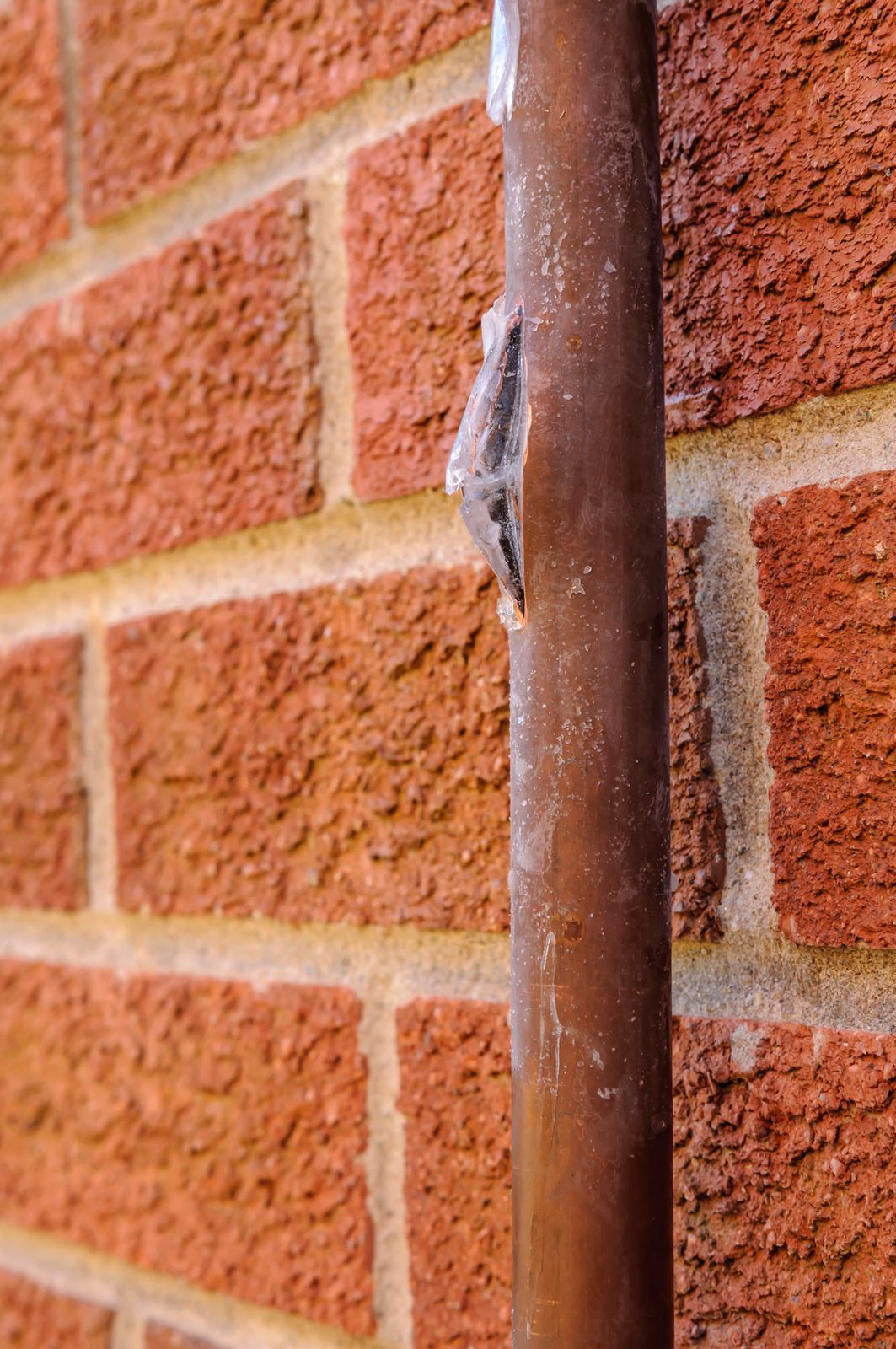
Here is the part most people get wrong about how a burst actually happens. Ice does not usually split the pipe at the spot where it freezes. As ice forms in one section, it traps water between the blockage and a closed faucet. The ice keeps growing, and the trapped water has nowhere to go, so pressure climbs in the stretch of pipe between the ice plug and the fixture. The pipe fails there, often a foot or more from the ice itself. That is why a pipe can look fine where it froze and still be leaking somewhere you cannot see.
The freeze also tends to be invisible until the thaw. A pipe can split on a cold night and show nothing until the temperature climbs the next afternoon and the ice melts, at which point water starts flowing through the opening. If you come home to a sudden stain on a ceiling after a cold night warms up, that timing is the clue.
Step One: Stop the Water at the Main
Before you look for the source, stop the supply. In most Richmond area homes the main shutoff is a ball valve or a gate valve where the water line enters the house, usually in the basement, the crawl space, a utility room, or near the water heater. Some homes have it by the street side of the foundation wall or in an outside meter box with a separate curb valve.
Turn a ball valve a quarter turn so the handle sits crosswise to the pipe. Turn a round gate valve clockwise until it stops. Older gate valves can be stiff or corroded after decades without being used, so turn steadily and do not force it with a tool that could snap the stem.
If you have never located your shutoff, find out before the next freeze. Many homeowners learn where it is for the first time with water on the floor, and that is a bad moment to start looking.
Tip: Tie a bright tag to the main shutoff valve and tell everyone in the house where it is. In a burst, the person who finds it first is rarely the person who owns the house, and seconds count when a split pipe is running at full line pressure.
Step Two: Make the Wet Area Safe
Water and electricity share the same rooms in most houses, so look at what the water is touching. If it is pooling around outlets, a power strip, a freezer, or a furnace, do not walk through it to reach a panel in a flooded basement. If you can reach the breaker box from a dry spot, switch off the breakers that serve the wet area. If the panel itself is in the wet area, stay out and have the utility or an electrician handle it.
Look up as well as down. Water that finds a ceiling cavity does not always drip. It collects and sags the drywall into a belly, and that weight can drop all at once. A bulge, a brown stain spreading outward, or a ceiling that looks soft is a sign to stay clear of the area below it. Moving the family out of the room is the correct call if anything overhead looks unstable.
Step Three: Drain the System
With the main closed, the pipes still hold water, and that water will keep leaking out of the split until the lines are empty. Draining the system takes the pressure down and limits how much more comes out.
Open the cold taps at the lowest and highest fixtures in the house. Flush the toilets to empty the tanks. Turn off the water heater at its switch, breaker, or gas control, then open the hot taps as well. Shutting the heater first matters because a tank that is empty of cold supply but still firing can overheat and damage the unit.
Leave the taps open while you work. Open taps also give any remaining ice somewhere to expand, which lowers the odds of a second split when the thaw continues.
Step Four: Find Out Whether It Burst or Only Froze
Not every cold snap problem is a burst. Sometimes you have a frozen pipe that is still intact, and the difference changes everything about what you do next.
Signs of a frozen but unbroken pipe include a faucet that runs weakly or not at all, frost on an exposed pipe, a pipe that feels extremely cold to the touch, and a rattling or gurgling sound as water tries to push past the blockage. No water on the floor, no stains, and a dry ceiling mean the pipe is probably still holding.
Signs of a burst include running water you can hear inside a wall, a wet floor or ceiling, a sudden drop in water pressure throughout the house, a water meter that keeps moving when every fixture is off, and mold smell or damp insulation in a crawl space. Hidden splits often show up first as a quiet sound of water where there should be none.
A good test is the meter. With the main still open and every fixture off, check whether the meter dial is moving. A moving dial means water is escaping somewhere. Close the main, and if the dial stops, the leak is on the house side of the line.
Thawing a Pipe That Has Not Split Yet
If the pipe is frozen and dry, the goal is to melt the ice slowly, from the faucet end back toward the blockage. Keep the faucet open the whole time so melting water and steam can leave the pipe instead of building pressure.
Warm air from a hair dryer, moved steadily along the pipe, works well. Towels soaked in hot water and wrapped around the pipe work too, replaced as they cool. Raise the thermostat and open cabinet doors under sinks on exterior walls so heated room air can reach the pipes.
Do not use a propane torch, a heat gun on its hottest setting, or any open flame. Copper conducts heat quickly, and a torch can scorch framing and insulation inside a wall or ignite what you cannot see. Flame can also boil the trapped water, which raises pressure fast and can split a pipe that would have survived.
Warning: If you cannot reach the frozen section, if the pipe is inside a wall or under a slab, or if you see any moisture on the pipe at all, stop thawing and call a plumber. A pipe that is wet may already be cracked, and a thaw that restores flow is also the moment a hidden crack starts leaking.
What to Do While You Wait for a Plumber
Once the water is off and the system is drained, you have a small window to protect the house. Move furniture, rugs, and anything valuable away from the wet area. Lift wet items off the floor so they do not wick moisture. Use towels, mops, and a wet vacuum to pull up standing water, and run fans or a dehumidifier if the power in that area is safe.
Take photos and short video of the damage before you move things, showing the burst section if it is visible, the wet surfaces, and the water line on affected walls. Clear pictures help you explain the problem clearly and keep track of what was affected.
Keep heat running in the house, even in rooms you are not using. A cold house is how the next pipe freezes while you are busy with the first one.
Do not start tearing out drywall or insulation yourself until the leak is found and stopped. Opening a wall to chase water you cannot see can spread damage and make the original break harder to locate.
Types of Heat Pumps
This is paragraph text. Click it or hit the Manage Text button to change the font, color, size, format, and more. To set up site-wide paragraph and title styles, go to Site Theme.
New Title
Why Hidden Breaks Need a Professional
A plumber does more than patch the visible split. A burst pipe is a sign that the line was stressed along its length, and the same freeze that split one section may have weakened a joint or a fitting nearby. A technician checks the entire run, repairs the failed section, and tests the system under pressure before the water goes back on for good.
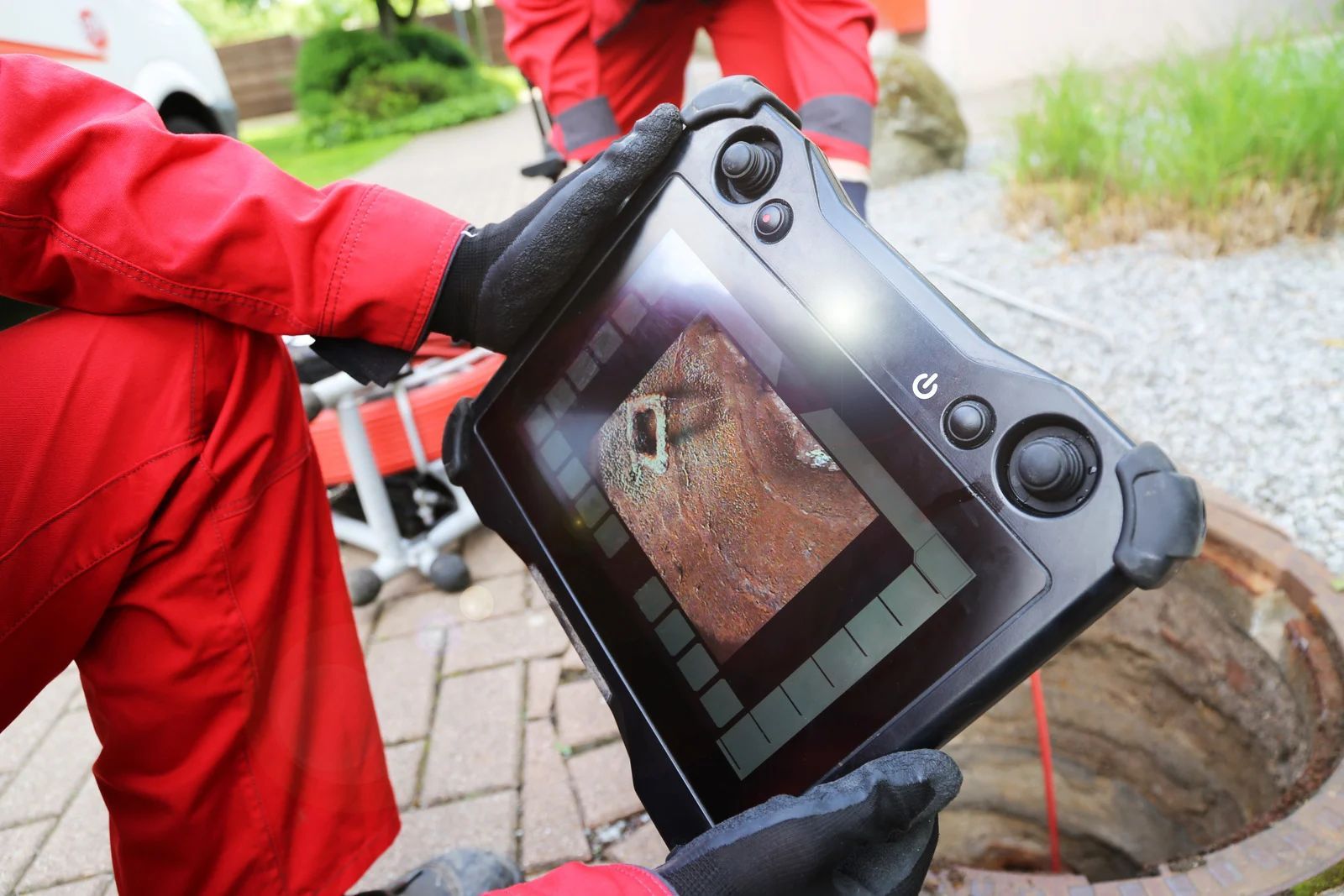
Locating a hidden leak is its own skill. Water travels along framing, pipes, and ductwork before it appears as a stain, so the wet spot is often not near the break. Leak detection equipment can trace the source without cutting open a wall at random, which means a smaller patch and a faster repair.
In older Richmond homes, the repair may also reveal the condition of the surrounding pipe. Galvanized steel and aging copper can be thin or corroded inside, and a technician can tell you whether the rest of that line is likely to hold through another cold snap or needs attention before the next one.
Cold Weather Habits That Keep the Next Freeze Away
Prevention is mostly small habits. Before the first hard freeze, disconnect and drain outdoor hoses and close the interior shutoff to any exterior hose bib, opening the outside spigot to let it drain. Seal gaps where pipes enter the house from outside, since a small draft can freeze a pipe in an otherwise warm space.
When a hard freeze is forecast, open cabinet doors under kitchen and bathroom sinks on exterior walls, and let a faucet on the coldest side of the house drip slowly. Moving water is much harder to freeze, and a drip keeps the pressure in the line from building if ice does form.
Insulate exposed pipes in crawl spaces, garages, and attics with foam sleeves, and keep your thermostat at a steady setting during a cold stretch rather than letting it drop overnight. Travelers should leave the heat on, never lower than the mid fifties, and ask someone to check the house during extended cold.
Frequently Asked Questions
How fast can a frozen pipe burst?
There is no fixed timeline. A pipe can freeze overnight and split only when the thaw raises pressure, so a faucet that stops running in the cold deserves quick attention.
Should I turn the water off if I only suspect a frozen pipe?
If there is no leak and only a weak faucet, keep the water on and thaw gently with the faucet open. If water appears anywhere unexpected, close the main immediately.
Is it safe to use a space heater to thaw a pipe?
It is risky near wet areas and flammable framing. A hair dryer or hot towels are safer, and no heating device should ever run unattended near a pipe.
Can a pipe burst even if it never looked frozen?
Yes. Splits often happen away from the ice, and a pipe inside a wall can fail without visible frost. Dropping pressure or running water sounds are usual warning signs.
How do I know if the leak is inside a wall?
Look for damp drywall, discoloration, a musty odor, warm floor spots over hot lines, or a meter that keeps moving with everything off. A plumber can pinpoint it.
Why does the water heater need to be turned off after a burst?
Draining leaves the tank without steady cold supply. A heater that keeps firing against an empty or partly empty tank can overheat and damage the unit or its controls.
Doing the Right Things in Order First
When a pipe lets go in a Richmond cold snap, the best outcome comes from a few steps taken in the right order: close the main valve, make the wet area safe, drain the lines, and then bring in help. The damage prevented in the first ten minutes is damage that never has to be dried out, repaired, or repainted. A plumber who arrives to a house with the water already off can start fixing the problem instead of containing it.
Keil Plumbing & Heating Inc.
has served homes in Richmond, VA for 100+ years, and that long history shows in how hidden breaks are tracked down and repaired. Checking the whole run instead of just the visible split, then pressure testing before the water returns, keeps one failure from becoming several. Homeowners get a line they can trust through the next hard freeze and a house that stays dry.