
Why Heat Pumps Are the Future of Efficient Home Heating and Cooling
June 18, 2026
Home comfort has never demanded more from the systems that deliver it. Rising energy awareness, tighter building codes, and growing demand for year-round temperature control have pushed homeowners to rethink what their HVAC equipment should actually do. Traditional furnaces and air conditioners each handle one job. A heat pump handles both, doing so by moving heat rather than generating it from scratch, which fundamentally changes how much energy a home consumes to stay comfortable.
That distinction matters more now than it ever has. As utility grids modernize and building science advances, the heat pump has moved from a niche solution in mild climates to a mainstream choice across North America. Cold climate heat pump models now operate reliably in temperatures well below freezing, erasing one of the technology's oldest limitations. Whether a homeowner is replacing aging equipment, building new, or simply looking to reduce dependence on fossil fuels, heat pumps represent a well-tested, technically sound path forward. This blog breaks down how they work, why they outperform conventional systems in several key areas, and what homeowners should consider before making the switch.
How Heat Pumps Actually Work
The Core Principle: Moving Heat, Not Making It
A heat pump does not burn fuel to create warmth. Instead, it uses refrigerant to absorb heat from one location and transfer it to another. In heating mode, it pulls thermal energy from outdoor air, ground, or water and moves that energy indoors. In cooling mode, it reverses the process, extracting heat from inside the home and releasing it outside.
This cycle relies on basic refrigeration science. Refrigerant absorbs heat when it evaporates and releases heat when it condenses. By controlling pressure and refrigerant flow, a heat pump can shift thermal energy in either direction depending on what the home needs. The result is a single system capable of replacing both a furnace and a central air conditioner.
Types of Heat Pumps
| Type | Heat Source | Best For |
|---|---|---|
| Air source | Outdoor air | Most climates, retrofit applications |
| Ground source (geothermal) | Earth's subsurface | High efficiency, new construction |
| Water source | Lakes, wells, aquifers | Properties with water access |
| Mini-split (ductless) | Outdoor air | Additions, older homes without ducts |
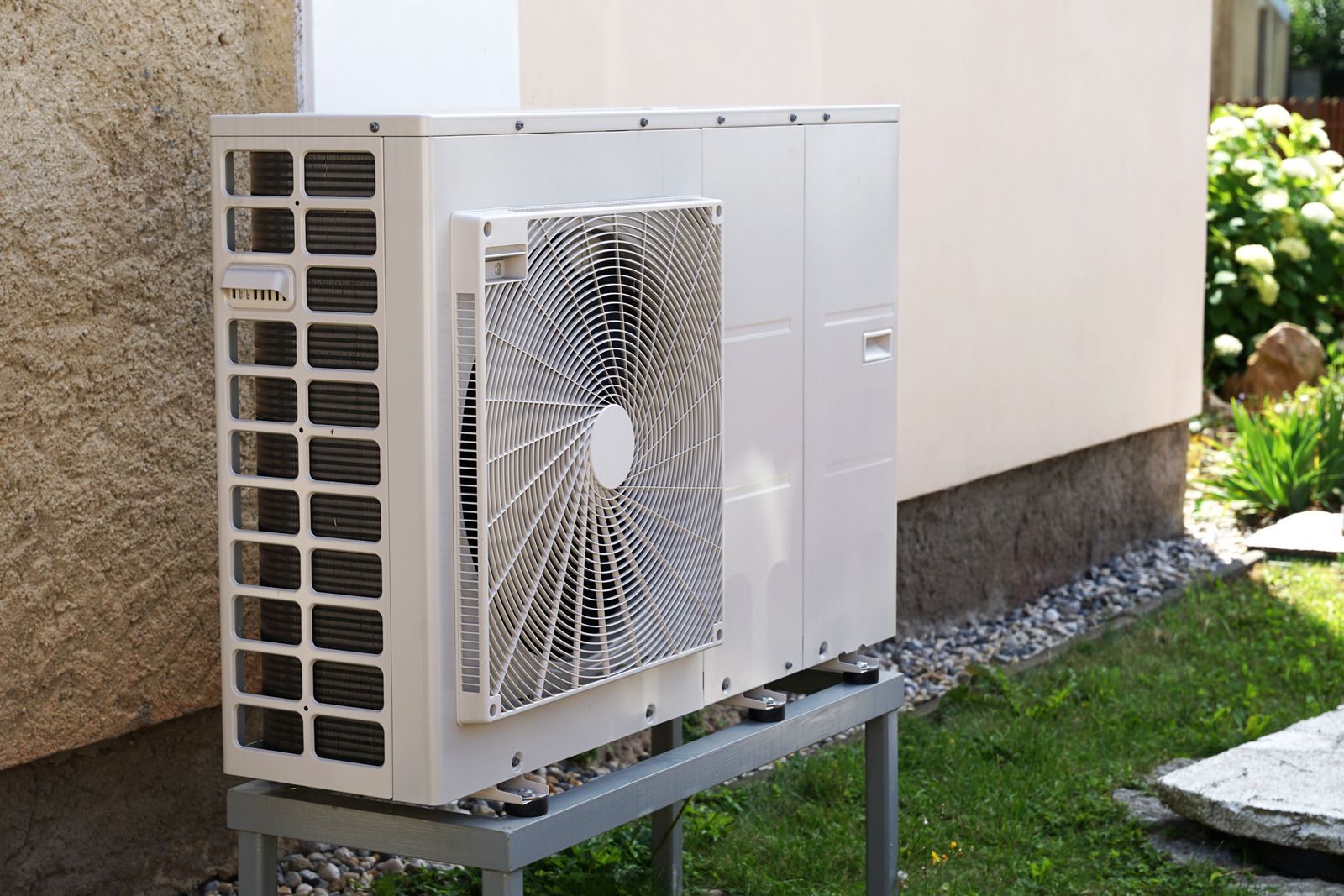
Air source heat pumps are the most widely installed type because they require no ground excavation or water access. Modern variable-speed compressor models adjust output continuously, maintaining steady indoor temperatures without the on-off cycling that wastes energy in older equipment.
Energy Efficiency: The Numbers Behind the Technology
Coefficient of Performance
Efficiency in a heat pump is measured by its Coefficient of Performance, or COP. A COP of 3 means the system delivers three units of heating or cooling energy for every one unit of electrical energy it consumes. Most air source heat pumps operate between a COP of 2 and 4, depending on outdoor temperatures and equipment quality.
For comparison, an electric resistance heater has a COP of exactly 1. A high-efficiency gas furnace converts fuel to heat at roughly 95 to 98 percent efficiency, but a heat pump operating at a COP of 3 is still significantly more efficient on a delivered-energy basis, even accounting for how electricity is generated.
Seasonal Performance
Efficiency varies with outdoor temperature. Cold climate heat pumps, which use advanced compressor technology and refrigerants like R-32 or R-410A, maintain strong performance down to minus 13 degrees Fahrenheit or lower. The Heating Seasonal Performance Factor (HSPF) and Seasonal Energy Efficiency Ratio (SEER) ratings help homeowners compare performance across heating and cooling seasons.
A minimum HSPF of 8.5 and SEER of 15 is standard for quality heat pumps today, with premium units reaching HSPF of 13 and SEER of 20 or higher.
Why Heat Pumps Outperform Traditional Systems
One System, Two Seasons
A furnace heats. A central air conditioner cools. A heat pump does both from a single outdoor unit. That consolidation reduces the total number of mechanical systems in a home, which simplifies maintenance and reduces the likelihood of simultaneous equipment failures during peak demand periods.
For homeowners replacing aging dual systems, switching to a heat pump also means one installation job instead of two, one service relationship, and one set of equipment to monitor.
Indoor Air Quality Advantages
Heat pumps do not produce combustion byproducts. Furnaces burning natural gas or oil generate carbon monoxide, nitrogen dioxide, and other combustion gases that must be vented safely to the exterior. A heat pump eliminates that risk entirely since no fuel combustion occurs inside the home.
Many heat pump systems also include variable-speed air handlers that run at lower speeds for longer periods. Longer runtimes improve air circulation through filters, which reduces airborne particulates, dust, and allergens more reliably than systems that cycle on and off aggressively.
Consistent Temperature Distribution
Variable-speed heat pumps modulate output to match the actual demand of the space. Rather than blasting conditioned air until a setpoint is reached and then shutting down, they run at partial capacity for extended periods. This approach maintains temperature within a degree or two of the thermostat setting, eliminating the hot and cold swings common with single-stage equipment.
Cold Climate Performance: Addressing the Biggest Misconception
Modern Heat Pumps Handle Harsh Winters
The belief that heat pumps cannot handle cold winters is based on older technology. First and second-generation air source heat pumps lost significant capacity as outdoor temperatures dropped below freezing, requiring backup resistance heat strips that consumed large amounts of electricity.
Cold climate heat pumps developed over the last decade use variable-speed scroll or rotary compressors, flash injection technology, and advanced refrigerant management to maintain capacity at extreme temperatures. Units from manufacturers including Mitsubishi, Daikin, Bosch, and Carrier are rated to deliver full or near-full heating capacity at outdoor temperatures of 5 degrees Fahrenheit, with some models rated to minus 22 degrees Fahrenheit.
Dual-Fuel Systems as a Transition Option
For homeowners in climates with extended periods below zero, a dual-fuel system pairs a heat pump with a gas furnace. The heat pump handles heating duties through most of the winter, switching to the gas furnace only during the coldest outdoor temperatures when the heat pump's capacity decreases. This arrangement captures the efficiency advantages of the heat pump during the majority of heating hours while retaining backup capacity for extreme conditions.
Installation Considerations and Best Practices
Load Calculations Come First
No heat pump installation should begin without a Manual J load calculation. This assessment accounts for the home's square footage, insulation levels, window area, ceiling height, air infiltration rate, and local climate data to determine the correct equipment size. Oversized heat pumps short-cycle, reducing comfort and accelerating wear. Undersized units run continuously and cannot maintain setpoints during peak conditions.
Duct System Evaluation
Air source heat pumps that use existing ductwork require a thorough duct inspection before installation. Leaky or undersized ducts reduce delivered airflow, which reduces both comfort and efficiency regardless of how capable the equipment is. Ductwork repairs or upgrades are often a worthwhile investment alongside new heat pump installation.
For homes without ducts, ductless mini-split heat pumps offer a practical solution. Individual air handling units mount in each room or zone, eliminating distribution losses entirely and enabling room-by-room temperature control.
Electrical Service Requirements
Heat pumps run on electricity. Homes switching from gas heating should verify that the electrical panel has sufficient capacity to handle the additional load. A 200-amp panel is typically adequate for a whole-home heat pump installation, though panel upgrades are sometimes necessary in older homes with smaller service entrances.
Experienced Professionals Handling Every Heat Pump Need Here
Heat pumps represent a technically mature, well-documented solution for whole-home heating and cooling that outperforms conventional equipment in energy use, indoor air quality, and temperature control. Their ability to move heat rather than generate it gives them a fundamental efficiency advantage, and advances in cold climate technology have extended their reliability across virtually every U.S. region. From proper load calculations to duct evaluation and electrical readiness, a successful heat pump installation depends on careful planning and qualified execution. Homeowners who approach the transition thoughtfully gain a system built for long-term performance.
At Keil Plumbing & Heating Inc., we bring over 100
years of combined expertise in plumbing, heating, cooling, and remodeling to homeowners across Richmond, Virginia and the surrounding region. We understand that switching to a heat pump is a significant decision, and we approach every project with the technical depth and hands-on knowledge that Richmond homes deserve. Our team evaluates your existing system, performs accurate load calculations, inspects ductwork, and recommends the right equipment for your home's specific needs and local climate demands. We work with leading heat pump manufacturers and stay current on evolving technology, installation standards, and available incentive programs so our clients receive guidance grounded in current industry practice. Whether you are replacing aging equipment, adding a ductless system to a new addition, or transitioning from gas to electric heating for the first time, we handle every phase of the project with precision. Richmond homeowners trust us because we deliver honest assessments, clean installations, and reliable follow-through. When you are ready to explore what a heat pump can do for your home's comfort and energy performance, Keil Plumbing & Heating Inc.
is ready to walk you through every step.
Frequently Asked Questions
Can a heat pump fully replace a furnace in a cold climate?
Yes. Modern cold climate heat pumps are engineered to deliver reliable heat output at outdoor temperatures as low as minus 13 to minus 22 degrees Fahrenheit, depending on the model. In most U.S. climates, a properly sized cold climate heat pump can serve as the sole heating source without a backup furnace. A dual-fuel setup is an option for regions with prolonged extreme cold.
How long does a heat pump typically last?
Air source heat pumps generally last 15 to 20 years with routine maintenance. Ground source systems have longer lifespans, often 20 to 25 years for the mechanical components, with underground loops lasting 50 years or more. Annual professional maintenance, including coil cleaning, refrigerant checks, and filter replacement, is the most important factor in equipment longevity.
Is my home a good candidate for a heat pump?
Most homes are suitable candidates. Key factors include the condition and size of existing ductwork, the electrical service capacity, local climate, and the current fuel source for heating. A qualified HVAC technician can perform a site assessment and load calculation to determine which heat pump type and configuration makes the most sense for your specific home.
What maintenance does a heat pump require?
Heat pumps require less maintenance than dual-system setups because a single piece of equipment handles both heating and cooling. Standard tasks include replacing air filters every one to three months, clearing debris from the outdoor unit, and scheduling professional tune-ups once or twice per year to inspect refrigerant levels, electrical connections, and coil condition.
Are there rebates or incentives available for heat pump installation?
Yes. The federal Inflation Reduction Act established tax credits for qualifying heat pump installations, and many state energy programs and utility companies offer additional rebates. Incentive availability and amounts vary by location and equipment type, so consulting with a licensed HVAC contractor and reviewing current federal and state program guidelines is the best way to understand what applies to your situation.